MIS 66-9275 has 63,345 views

The following lecture is presented by the National Museum of Health and Medicine
Date/Time: 09 Dec 09/1100am
Location: Dart Auditorium
Speaker(s): Franklin Damann
Curator
National Museum of Health and Medicine
Title: Human Decomposition Ecology
Details: The museum Curator discusses recent research exploring the regulation of human decomposition at the University of Tennessee's Anthropology Research Facility. One goal of this research is to assess the potential the microbial community to estimate time since death.
Department of Medical Education
Armed Forces Institute of Pathology
6825 16th Street, NW
Washington, DC 20306-6000
Ph: (202) 782-2596
Navy Medicine in the Last Campaigns: Iwo Jima and Okinawa
The presenter is Jan Herman, M.A.
Historian of the Naval Medical Department
Special Assistant to the Navy Surgeon General
http://mediasite.cidde.pitt.edu/mediasite/Viewer/?peid=7b8b1494-f99f-4726-8177-46b28a75bd7f
The brain of Henry Molaison, who could not form memories after his brain surgery, is being dissected – you can read about it in this article - Dissection Begins on Famous Brain, By BENEDICT CAREY, December 3, 2009, http://www.nytimes.com/2009/12/03/health/research/03brain.html?_r=1&scp=1&sq=brain%20memory&st=cse and view it live here - http://thebrainobservatory.ucsd.edu/hm_live.php
We have a very large brain collection in our Neuroanatomical Division.
A nice article on the Museum is at http://news.harvard.edu/gazette/wp-content/uploads/2009/12/HarvardGazette12.03.091.pdf
The Art and Science of "OUTBREAK: Plagues that Changed History"
with the artist Bryn Barnard
When: Saturday, December 5, 2009, 10:00 a.m.-5:00 p.m. (Feel free to drop in; no reservations required.)
| What: Bryn Barnard, author and artist of "OUTBREAK," will host three exciting programs on Saturday, December 5, 2009, including an illustration workshop and a special session aimed at younger audiences. Free, open to the public, no reservations required. See the schedule below for more details. Questions? Call (202) 782-2673 or email nmhminfo@afip.osd.mil. Schedule: (Come for one program, or stay for the whole day!): 11:00 a.m. - 11:30 a.m.: Book Signing (limited quantity of books available for sale in the Museum gift shop) 1:00 p.m.: “OUTBREAK: Plagues That Changed History”—Join Bryn Barnard for a discussion about several diseases represented in his book, including the plague, cholera, tuberculosis, and toxoplasmosis. 2:15 a.m. - 3:00 p.m.: Book Signing and Coffee Break with the Artist 3:00 p.m.: Family Program: Children will enjoy this special presentation on illustrating science books, including a demonstration by the artist! Presentation will be followed by a book signing. |
Lecture at the NMHM: Investigating Emerging Diseases
When: Wednesday, December 9, 2009, 1:00-2:00 p.m.
| What: Dr. Michael Turell, a research entomologist with the Virology Division of the U.S. Army Medical Research Institute on Infectious Disease, will discuss the institute's role in investigating several outbreaks including Hantavirus, Ebola, and West Nile virus. |
Cost: FREE.
For more information: (202)782-2673 or nmhminfo@afip.osd.mil


We have the Alfred J. Suraci (1911-1993) Collection in the archives, which includes the papers and two photograph albums Dr. Suraci made of his World War 2 patients at Northington General Hospital in Tuscaloosa, Alabama. Later Dr. Suraci was the chief of plastic surgery at Providence Hospital, Prince George's Doctor's Hospital, and Sibley Memorial Hospital. Here are scans of the cover of one of the albums and a title page.


The Art and Science of "OUTBREAK: Plagues that Changed History" with the artist Bryn Barnard
When:
Saturday, December 5, 2009, 10:00 a.m.-5:00 p.m. (Feel free to drop in; no reservations required.)
What:
Bryn Barnard, author and artist of "OUTBREAK: Plagues that Changed History," (on exhibit through Jan 22, 2010 at NMHM) will host three exciting programs on Saturday, December 5, 2009, including an illustration workshop and a special session aimed at younger audiences. Free, open to the public, no reservations required.
See the schedule online at http://nmhm.washingtondc.museum/events/event_2ed.html for more details. Questions? Call (202) 782-2673 or email nmhminfo@afip.osd.mil.
Where:
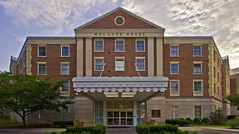
National Museum of Health and Medicine, on the campus at Walter Reed Army Medical Center
6900 Georgia Avenue, NW, Building 54, Washington, D.C. 20307 (Enter at Elder St., NW)
Adults must present photo identification to gain entry to Walter Reed.
Contact:
(202) 782-2673 or email nmhminfo@afip.osd.mil
From our researcher Mike Lemish, whose book on military working dogs in Vietnam is due out in January:

This is the 4” patch that will accompany the book, which should be out by mid-January, at the latest (I hope!):

ARF!

I heard on NPR this morning that millions of yellow fever vaccines, about 12 million actually, are now being offered in Sierra Leone, Liberia, and Benin. According to the World Health Organization, since 2007 a total of 29 million people have been protected through mass vaccinations conducted in other African countries. We have in our Registry of Noteworthy Research in Pathology some records of Max Theiler, who received a Nobel Prize in 1951 for his development of an effective vaccine against the disease.
The Journal of Experimental Medicine published an article in 2007 about Max Theiler and his years-long efforts to develop a vaccine. The first field trial in Brazil in 1938 proved to be highly successful and since then, more than 400 million doses have been shown to be safe and effective. The vaccine is still produced the same way as Theiler developed it in 1938: by passing the virus through chicken embryos.
Theiler won the Nobel Prize after just four nominations. The first time was in 1937 for his work on yellow fever in mice. The committee wasn't impressed. In 1948 the second nomination came from Albert Sabin (later of polio vaccine fame). The committee was a little more impressed but said Theiler's work would be prize-worthy if someone could show it was he and not his colleague Wray Lloyd who had conceived of and planned the work. The committee accepted the documentation that was produced and said good job, but gave the prize to Paul Müller for his work on DDT.
1950 produced another nomination. The committee said really good job this time but gave the prize to three other researchers for their discoveries on hormones of the adrenal cortex.
In 1951, on the very last day that prize nominations were being accepted for the year, the chairman of the committee, Hilding Bergstrand, slid in his recommendation for Theiler under the wire. Theiler was in competition with Selman Waksman for his discovery of streptomycin. Can't you see the committee holding yellow fever vaccine in one hand and streptomycin in the other, weighing them against each other? To Theiler's advantage, not only did Bergstrand do the nominating, he also did the evaluating. Fourth time was the charm, and Theiler won the only Nobel Prize ever awarded for a vaccine. Waksman won the following year but it had taken him 39 nominations over six years.


I just uploaded several medical illustrations of empyema on our Flickr page. I came across at least a couple of dozen of them today and this is the first installment.