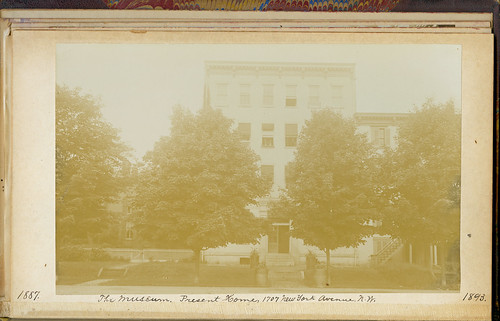
 The Museum. Present Home. 1707 New York Avenue, N.W. 1887-1893.
13-0103-003
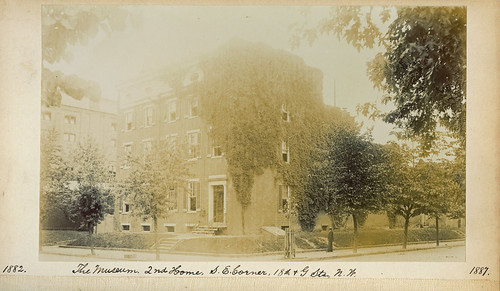 The Museum. 2nd Home. S.E. Corner 18th & G Sts, NW. 1882-1887.
13-0103-002
The Museum. 2nd Home. S.E. Corner 18th & G Sts, NW. 1882-1887.
13-0103-002
 The Museum. Birth-place. 18th + K Sts, N.W. 1879-1882.
13-0103-001
The Museum. Present Home. 1707 New York Avenue, N.W. 1887-1893.
The Museum. 2nd Home. S.E. Corner 18th & G Sts, NW. 1882-1887.
13-0103-002
The Museum. Birth-place. 18th + K Sts, N.W. 1879-1882.
13-0103-001
The Museum. Birth-place. 18th + K Sts, N.W. 1879-1882.
13-0103-001
The Museum. Present Home. 1707 New York Avenue, N.W. 1887-1893.
The Museum. 2nd Home. S.E. Corner 18th & G Sts, NW. 1882-1887.
13-0103-002
The Museum. Birth-place. 18th + K Sts, N.W. 1879-1882.
13-0103-001
| Bangkok's macabre museum of death New Zealand Herald By Emily Gibson Emily Gibson discovers the gruesome displays on offer at Bangkok's Siriraj Medical Museum - the Museum of Death. |
| | ||
| Luckey charm KPCnews.com Today, he volunteers at the museum. WOLF LAKE — Since 2003, the former Luckey Hospital has been a medical museum, with apartments currently on the second ... |
In 2002, Gunther von Hagens's display of plastinated corpses opened in London. Although the public was fascinated by Body Worlds, the media largely castigated the exhibition by dismissing it as a resuscitated Victorian freak show. By using the freak show analogy, the British press expressed their moral objection to this type of bodily display. But Body Worlds and nineteenth-century displays of human anomalies were linked in more complex and telling ways as both attempted to be simultaneously entertaining and educational. This essay argues that these forms of corporeal exhibitionism are both examples of the dynamic relationship between the popular and professional cultures of the body that we often erroneously think of as separate and discrete. By reading Body Worlds against the Victorian freak show, I seek to generate a fuller understanding of the historical and enduring relationship between exhibitionary culture and the discourses of science, and thus to argue that the scientific and the spectacular have been, and clearly continue to be, symbiotic modes of generating bodily knowledge.
| | ||
| Odd sale catalogue rattles a few bones The Age The skeletons are among 3000 items from the former medical museum at Kryal Castle theme park, being sold in 291 lots. The skeletons are listed as Lot 285 ... |
Following on the National Library of Medicine's participation in the recent symposium Shared Horizons: Data, Biomedicine, and the Digital Humanities, and as part of its ongoing cooperation with the National Endowment for the Humanities, you are cordially invited to the next NLM History of Medicine lecture, to be held on Tuesday, April 30, from 2:00 to 3:00 p.m., in the NLM Visitor Center, Building 38A on the NIH campus in Bethesda, MD.
The speaker will be Dr. E. Thomas Ewing, from Virginia Tech, who will speak on "'Scourge on Wane; Fatalities Fewer': Interpreting Newspaper Coverage of the 1918 Influenza Pandemic."
Please note that this lecture was announced earlier under a somewhat different title.
This lecture will describe how a team of researchers is harnessing the power of data mining techniques with the interpretive analytics of the humanities and social sciences to understand how newspapers shaped public opinion and represented authoritative knowledge during the deadly pandemic that struck the United States in 1918. The research methods developed through this project promise new insights into understanding the spread of information and the flow of disease in other societies facing the threat of pandemics.
All are welcome.
Sign language interpretation is provided. Individuals with disabilities who need reasonable accommodation to participate may contact Stephen Greenberg at 301-435-4995, e-mail greenbes@mail.nih.gov, or the Federal Relay (1-800-877-8339).
Due to current security measures at NIH, off-campus visitors are advised to consult the NLM Visitors and Security website:
http://www.nlm.nih.gov/about/visitor.html
Sponsored by
NLM's History of Medicine Division
Jeffrey S. Reznick, PhD, Chief
Event contact:
Stephen J. Greenberg, MSLS, PhD
Coordinator of Public Services
History of Medicine Division
National Library of Medicine,
National Institutes of Health
Bethesda, MD
| TV antiques show to highlight macabre museum Evesham Journal A MEDICAL museum based at a Worcester hospital and known for its ghoulish ... The George Marshall Medical Museum, based at the Charles Hastings Education ... |
| | ||
|
| Booth mystery must remain so - for now Philly.com Their request for access to an alleged Booth specimen - three cervical vertebrae in the collection of the National Museum of Health and Medicine in ... |
|
It is with great pleasure that we present to you the latest edition of The Grog, A Journal of Navy Medical History and Culture. In this issue, we offer our readers an original assortment of stories, essays, trivia and book reviews covering the topics of: the life and lessons of the heroic World War I nurse Edith Cavell; a look back at Hennesey, the only Navy Medicine-themed TV sitcom in history; the Navy's 115-year history of Global Health Engagement; Navy's Medicine and the Knickerbocker Theater Disaster; an illustrated look at service with the FMF; oral history interviews and their application to the arts; notes from the Navy Medical Archives; and a short review of Larry Berman's book, "Zumwalt." As always we hope you enjoy this tour on the high seas of Navy Medicine's past.
Issue 36, 2013
http://issuu.com/thegrogration/docs/the_grog_issue_36__2013
Very Respectfully,
André
André B. Sobocinski
Historian/Publications Manager
Office of Medical History
Communications Directorate (M09B7C)
Bureau of Medicine and Surgery (BUMED)

